Slab Moisture Testing
We test before we quote the system, using methods such as in-situ relative humidity probes (ASTM F2170) or calcium chloride tests (ASTM F1869).
How testing works →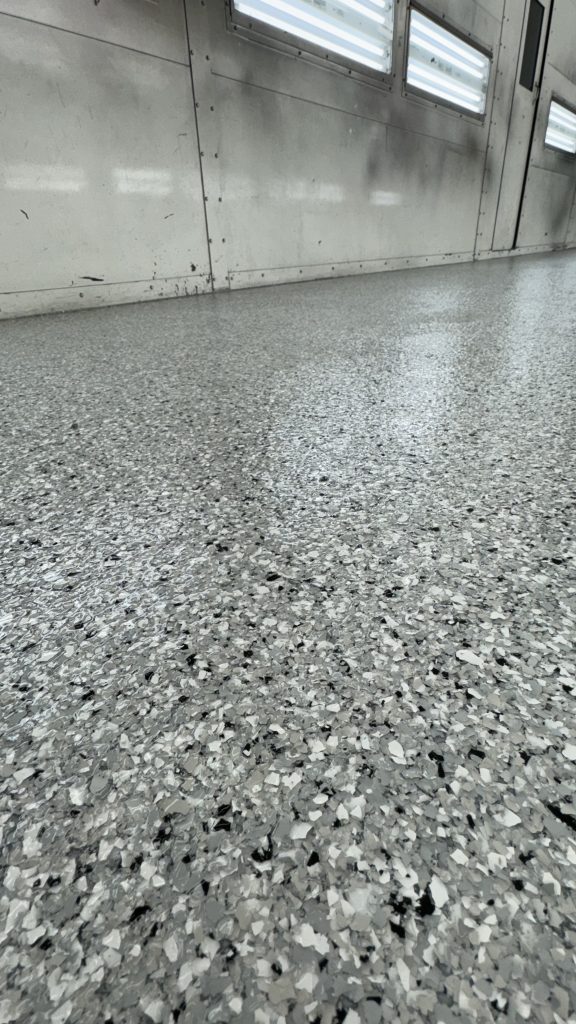
Moisture vapor barrier coatings for Florida slabs that test high for moisture. We test the concrete, install a moisture-mitigating epoxy primer rated for the readings, then build your floor system on top, so it doesn't blister or peel from below.
One Of A Kind Epoxy Design And Painting tests and treats high-moisture slabs for homes and businesses across Hillsborough, Manatee and Sarasota counties. Call 941-281-8866 to schedule a free on-site estimate.
Most Florida buildings sit on a slab poured directly over the ground, often above a high water table. Moisture vapor moves up through that concrete and pushes against anything on top of it. On a slab with high moisture, a standard epoxy floor can look perfect for months and then blister, whiten or peel in patches.
A moisture vapor barrier coating is the fix. After diamond grinding, we apply a moisture-mitigating epoxy primer designed to hold back vapor pressure, then install the flake, solid, metallic or polyaspartic system you chose on top of it. For why this happens and how slabs are tested, read moisture problems in Florida concrete.
We check moisture on every job. Barrier primers are most often needed on older slabs that were poured without an intact vapor retarder underneath, on waterfront and low-lying lots, on slabs that have been covered by tile, carpet or vinyl for years, and on commercial buildings where the floor has to stay in service.
| Test | What it measures | Notes |
|---|---|---|
| ASTM F2170 | Relative humidity inside the slab using in-situ probes | Takes time for the probes to stabilize; reflects conditions deeper in the concrete |
| ASTM F1869 | Moisture vapor emission rate (lbs per 1,000 sq ft per 24 hours) using calcium chloride kits | Measures what's leaving the surface over about 3 days |
| ASTM D4263 | Plastic sheet taped to the slab | Quick visual screen only, not a measurement |
The primer is chosen to the manufacturer's rated limits for the readings we get. Many moisture vapor barrier primers are tested to ASTM F3010, and some are rated for emissions up to around 20 lbs per 1,000 sq ft per 24 hours. Check the product data sheet; we'll show you the numbers.
A moisture vapor barrier coating handles moisture vapor coming up through sound concrete. It doesn't fix standing water, active leaks, drainage running toward the building or structurally damaged concrete. Those need to be solved first. If you're weighing a simple sealer instead, see epoxy flooring vs. concrete sealer.
Moisture mitigation typically adds about $1.25–$1.75 per square foot to a floor system in our market, on top of the coating itself. Garage and commercial system pricing is covered in epoxy flooring cost and on our commercial flooring page. Your quote follows testing and a free on-site measure.
We test and treat slabs throughout:
Learn more:
It's a moisture-mitigating epoxy primer applied to ground concrete before the floor coating. It holds back moisture vapor coming up through the slab so the floor system on top doesn't blister or peel.
Testing tells you. We use methods such as ASTM F2170 relative humidity probes or ASTM F1869 calcium chloride tests and compare the readings to the coating manufacturer's limits.
In our market it typically adds about $1.25 to $1.75 per square foot on top of the floor system. Your quote follows testing and an on-site measure.
Yes. The failed coating is ground off, the slab is tested, and a new system goes down over a moisture vapor barrier primer when readings call for it.
No. It's designed for moisture vapor moving through sound concrete. Active leaks, standing water or drainage problems need to be fixed first.
We'll test your concrete, explain the readings and recommend the right primer and floor system. Free on-site estimates from our Ruskin shop.
941-281-8866