
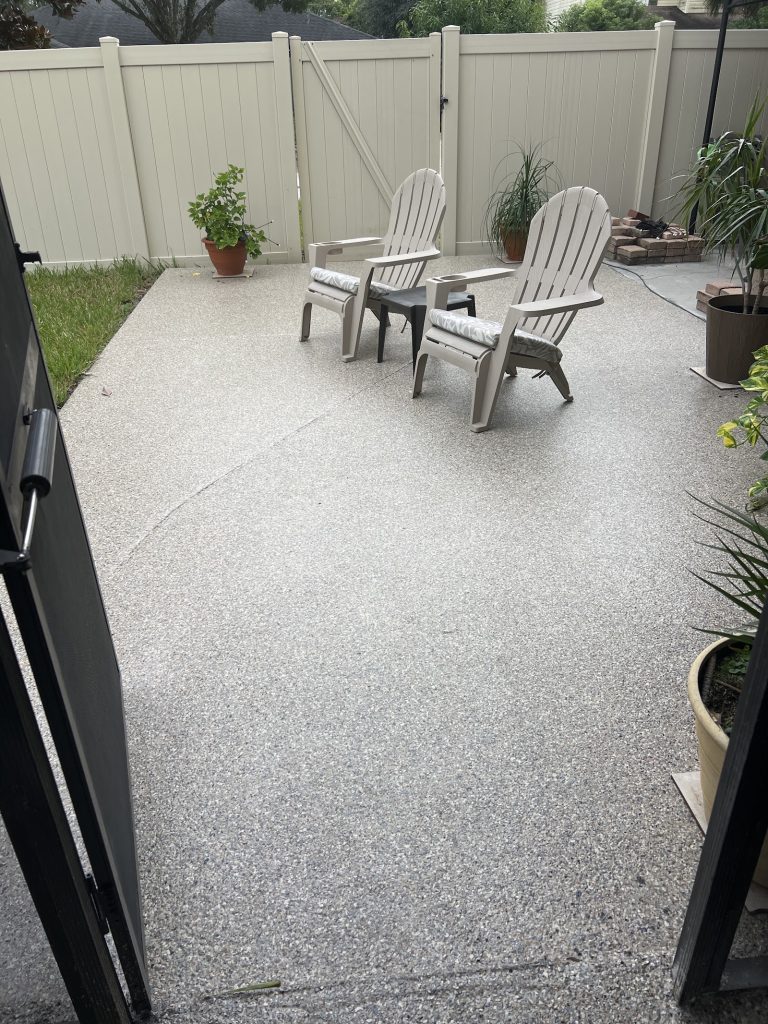
Epoxy can be used outdoors in Florida, but not as the exposed top layer. Standard epoxy is aromatic, so Florida sun turns it amber and chalky, often within the first year or so. For outdoor epoxy in Florida, the right approach is either an epoxy base protected by a UV-stable aliphatic topcoat such as polyaspartic or polyurethane, or a full polyaspartic system. For some slabs, a penetrating sealer is the more honest recommendation.
Lanais, patios, pool decks, front entries and breezeways are all common coating projects around Sarasota, Lakewood Ranch, Venice and the rest of the Gulf Coast. Here is what the sun does to coatings, which chemistries hold up, and how to build an outdoor floor that still looks right years from now.
What Florida Sun Does to Outdoor Epoxy
Epoxy is chemically classified as aromatic. That is not about smell. It describes a molecular structure that breaks down under ultraviolet light. As that happens, you see:
- Ambering or yellowing. Clear coats turn yellow-brown, and light colors shift noticeably. Grays and whites show it first.
- Chalking. The surface develops a dull, powdery layer that rubs off on hands and feet.
- Loss of gloss. The finish goes flat and blotchy, especially in the sunniest areas.
- Uneven color. Shaded areas under furniture or roof edges stay closer to the original color, leaving visible outlines.
Yellowing is primarily a cosmetic problem at first, but chalking means the surface is degrading. Over time the coating gets thinner and more vulnerable to wear and water.
Garages get sun too
This is not only an outdoor issue. A garage with a west-facing door left open in the afternoon gets hours of direct sun on the front few feet of floor. That is one reason we top most garage systems with polyaspartic rather than leaving epoxy exposed. We compare those chemistries in epoxy vs. polyaspartic flooring in Florida.
Which Coatings Are UV-Stable?
The alternative to aromatic is aliphatic chemistry, which resists UV breakdown. The main aliphatic options for floors are polyaspartic, polyurea and polyurethane topcoats.
| Coating | UV stability | Outdoor role in Florida | Notes |
|---|---|---|---|
| Standard epoxy | Poor: ambers and chalks | Base coat only, under a UV-stable topcoat | Excellent build and adhesion |
| Polyaspartic | Good: aliphatic, holds color | Topcoat or full system | Fast cure; short working time in heat |
| Polyurea (aliphatic) | Good | Topcoat or system component | Related chemistry to polyaspartic |
| Polyurethane topcoat | Good | Topcoat over epoxy | Common UV-stable seal over epoxy base |
| Penetrating sealer | Not a film, so nothing to yellow | Standalone protection for bare concrete | No color, build or decorative finish |
How an Outdoor Coating System Is Built
A well-built outdoor system in Florida usually looks like this:
- Diamond grinding and repairs. The slab is ground to open the surface and create a profile, and cracks and pitting are repaired. Outdoor slabs often have more weathering and old sealers to remove. Thin-film coatings typically need a concrete surface profile of CSP 2–3 on the ICRI scale.
- Base coat. Either epoxy, for build and adhesion, or polyaspartic in a full-poly system.
- Broadcast. Decorative flake or aggregate for texture, color and grip.
- UV-stable topcoat. Polyaspartic or another aliphatic topcoat, with anti-slip additive where people walk barefoot or surfaces get wet.
The topcoat is what the sun sees. As long as it is aliphatic and kept in good condition, the epoxy underneath is protected.
Other Outdoor Stressors in Florida
UV is the headline, but outdoor concrete in Florida faces more than sun.
Heat during installation
Direct sun on a slab during installation can cause outgassing, where air in the concrete expands and pushes bubbles and pinholes through the fresh coating. It also shortens working time. Outdoor installs need careful timing. The details are in how Florida heat and humidity affect epoxy flooring.
Moisture from below
Patios and lanais sit on grade, often with no vapor barrier and plenty of rain and irrigation soaking the soil next to them. Moisture vapor pushing up can blister a coating. Testing and, when needed, a moisture-mitigating primer are covered in moisture problems in Florida concrete.
Rain, salt air and storms
Afternoon storms, salt air near the coast and occasional storm cleanup all favor a sealed surface that sheds water and dirt. A coated lanai hoses off far more easily than bare, porous concrete.
Surface heat and slip
Dark colors in full sun get hot underfoot, and a glossy outdoor surface gets slick when wet. Light colors and textured topcoats solve both. That topic has its own article: slip-resistant pool deck and lanai coatings for Florida homes.
When a Sealer Is the Better Choice
A full coating is not always the right answer outside. A penetrating sealer can make more sense when:
- The slab is a plain driveway or walkway where you mainly want to reduce staining and water absorption
- The concrete has persistent moisture and you want a breathable treatment
- You like the look of natural concrete and do not need color or a decorative finish
- Budget is the main driver and the area sees light use
A sealer will not give you color, flake, a decorative finish or real build, but it also has no film to yellow or peel. We cover the trade-offs in epoxy flooring vs. concrete sealer.
Picking Colors for Outdoor Florida Concrete
Even with a UV-stable topcoat, color choice matters outdoors:
- Light, neutral tones stay cooler underfoot and hide dust and pollen.
- Flake blends hide minor wear, leaves and water spots between cleanings.
- Metallic finishes are generally better suited to covered or interior areas, and anywhere they get sun they need a UV-stable topcoat.
- Very dark solids absorb heat and show every speck of dust and pool chemical residue.
Covered vs. Uncovered Outdoor Areas
Not every outdoor slab gets the same exposure, and the system can be matched to it:
- Fully exposed patios and pool decks get direct sun most of the day. A UV-stable topcoat, light colors and slip-resistant texture are essential.
- Screened lanais and pool cages filter some sun but still see plenty of UV and wind-driven rain. Treat them as outdoor surfaces.
- Covered lanais, breezeways and entries under a roof get less direct sun, but low morning and evening light still reaches the edges. A UV-stable topcoat is still the safe choice.
- Garage aprons and the front of the garage floor get sun whenever the door is open, which is why sun exposure factors into garage systems too.
Signs an Outdoor Coating Is Failing
If you already have a coated patio or lanai, these clues point to a UV or system problem rather than normal wear:
- Yellow or brown discoloration that is worse in the sunniest spots
- A chalky film that rubs off on your hand
- Outlines where furniture or planters shaded the surface
- Blisters or peeling, which usually point to moisture from below or poor prep rather than UV
A yellowed but well-bonded epoxy can often be ground and recoated with a UV-stable topcoat. A coating that is peeling or blistering generally needs to come off completely so the cause can be fixed.
Maintaining an Outdoor Coated Surface
Outdoor coatings last longer with simple care: rinse off dirt and salt residue regularly, clean up pool chemicals and fertilizer promptly, and avoid dragging heavy metal furniture across the surface. Over time, a worn outdoor topcoat can be scuffed and recoated to restore UV protection and grip, which is far simpler than replacing the whole system.
Outdoor Coatings Across Our Service Area
Outdoor work is a big part of what we do along the Gulf Coast, from lanais and pool cages in Sarasota, Venice and Lakewood Ranch to patios and entries in Ruskin, Apollo Beach and Parrish. Our concrete polishing and pool deck coatings page explains the service, and our complete guide to epoxy flooring in Florida covers everything else about coatings in our climate.
Near the coast, salt adds a second challenge on top of UV. See salt-air resistant floor coatings.
Frequently Asked Questions
Does epoxy turn yellow in the sun?
Yes. Standard epoxy is aromatic, so UV exposure causes it to amber, yellow and chalk over time. Outdoors or in sunny garages it should be covered with a UV-stable aliphatic topcoat.
What is the best coating for an outdoor patio in Florida?
For a decorative, durable finish, a system with a UV-stable polyaspartic topcoat over a properly ground slab works well. For plain concrete where you just want to reduce staining, a penetrating sealer may be the better fit.
Is polyaspartic UV resistant?
Polyaspartic is aliphatic, which means it resists UV breakdown and holds its color in sunlight. That is why it is commonly used as a topcoat outdoors and in garages.
Can I put epoxy on my lanai?
Epoxy can be part of a lanai system as the base coat, but the exposed layer should be a UV-stable topcoat such as polyaspartic. Adding slip-resistant texture is also recommended.
How do I keep an outdoor concrete coating from getting hot?
Choose light, neutral colors or light flake blends. Dark solid colors absorb much more heat in direct Florida sun.
Get a Free Estimate From One of a Kind Epoxy
One Of A Kind Epoxy Design And Painting has 15+ years of coating experience across Ruskin, Apollo Beach, Sun City Center, Riverview, Tampa, Parrish, Bradenton, Lakewood Ranch, Sarasota, Venice and North Port. Every floor starts with diamond grinding and crack and pit repair, then a coating system chosen for Florida heat, humidity and UV.
Call 941-281-8866 or request your free on-site estimate. We’ll measure your space, check the slab, and recommend the right system for how you use it.