
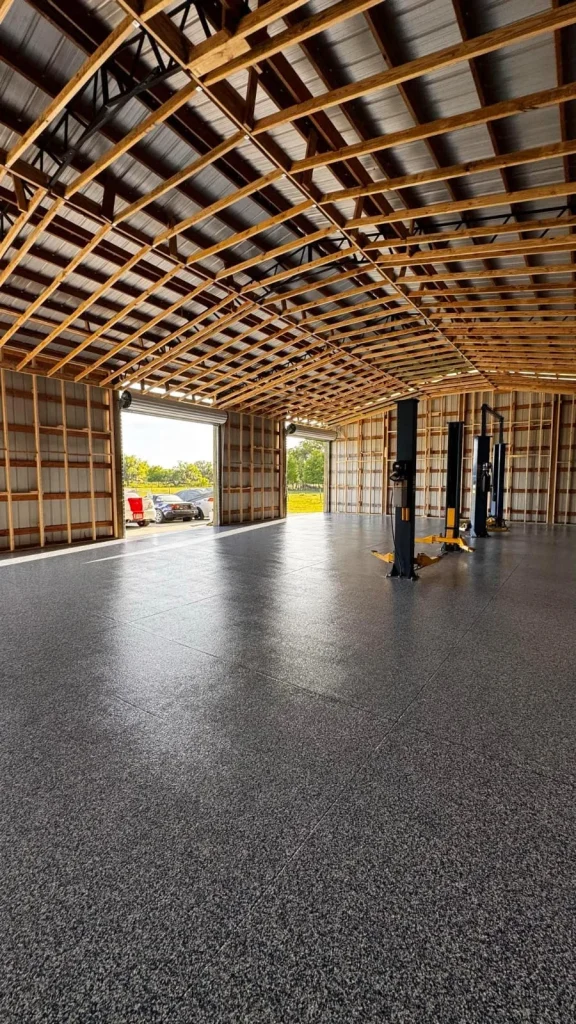
The short answer on epoxy vs concrete sealer: a sealer soaks into or lightly films the concrete to slow down water and stains, while an epoxy coating builds a thick, bonded new surface on top of the slab. If you want a floor that shrugs off oil, cleans with a mop and looks finished, you need a coating. If you just want bare concrete to resist water and weathering with minimal change in appearance, a sealer is the right, cheaper tool.
We get this question weekly from homeowners around Ruskin, Apollo Beach and Sarasota, usually after they have priced both and noticed how far apart the numbers are. The gap is real, and it exists because the two products do very different jobs. Here is how to decide.
What a Concrete Sealer Actually Does
“Sealer” is a broad word that covers two main families of products:
- Penetrating sealers soak into the pores of the concrete and react inside the slab. They leave little or no visible film, so the concrete looks about the same as before. Their job is to reduce water absorption and help with weathering.
- Topical (film-forming) sealers sit on the surface as a thin clear layer. They often add a slight sheen or “wet look” and give some stain resistance, but the film is thin, so it wears through in traffic lanes and needs to be reapplied periodically.
Either way, a sealer is a protective treatment for concrete. It does not hide cracks, stains, pitting or patchwork. What you see on the slab today is what you will see after it is sealed, just a little darker or glossier.
What an Epoxy Coating Does
A professional epoxy floor is a multi-layer system. On our jobs that means diamond grinding the slab to open the surface, repairing cracks and pitting, then applying a bonded base coat and building up from there with color, decorative flake or metallic pigment, and a clear topcoat. On most garages we pair an epoxy base with a polyaspartic topcoat, because epoxy on its own is aromatic and will amber and chalk under UV.
The result is a new wearing surface. Oil, gas and antifreeze sit on top instead of soaking in. Stains and old repairs are covered. Anti-slip additives can go into the topcoat, and flake floors have natural texture built in. It is a finished floor, not a treated slab.
Epoxy vs Concrete Sealer: Side-by-Side
| Factor | Concrete Sealer | Epoxy / Polyaspartic Coating |
|---|---|---|
| What it is | Penetrating treatment or thin clear film | Thick, bonded multi-coat system |
| Appearance | Concrete looks the same, maybe darker or glossier | Fully new look: solid color, flake, or metallic |
| Hides cracks and stains | No | Yes, after repairs |
| Oil and chemical resistance | Limited; spills can still stain | Strong against oil, gas, antifreeze |
| Hot-tire pickup risk | Topical films can lift | Low with proper prep and a quality system |
| Prep required | Cleaning; some products need light prep | Diamond grinding, crack and pitting repair |
| Maintenance | Reapply periodically | Clean regularly; residential floors can last 15–20+ years with proper prep |
| Upfront cost | Much lower | Higher; typical Tampa Bay garage systems run roughly $5–$9.50/sq ft |
When a Sealer Is the Right Call
We are a coating company, but we will tell you straight: plenty of concrete does not need epoxy. A sealer makes sense when:
- You like the look of plain concrete and just want it to resist water, mildew and weathering.
- It is an outdoor slab that takes full sun, such as a driveway or walkway, where a breathable penetrating sealer is simple and low-risk. Standard epoxy is a poor choice in direct Florida sun. If you want a coated outdoor surface, it needs a UV-stable system; see our guide to outdoor epoxy and UV protection in Florida.
- The slab has known moisture problems and you are not ready to pay for testing and mitigation. A breathable sealer lets vapor pass through; a coating over an untreated wet slab can blister. More on that in our post on moisture problems in Florida concrete.
- Budget is the deciding factor and the floor sees light use, like a storage area or covered side yard.
- You want a polished concrete look. Polished and densified concrete is its own path, and we handle that through our concrete polishing and pool deck coating services.
When You Need a Coating Instead
A sealer is the wrong tool when the floor has real work to do. Go with a coating when:
- Cars park on it. Garage floors see hot tires, dripping oil, road grime and summer rain tracked in daily. Thin topical sealers are among the products that lift under hot tires in Florida heat. Our article on hot-tire pickup explains why.
- You want it to look finished. If the slab is stained, patched or cracked, a sealer will lock those flaws in. A coating covers them after they are repaired.
- Cleanup matters. A coated floor wipes clean. That is a big deal after a storm, a leaking golf cart battery in a Sun City Center garage, or a workshop spill.
- You need slip resistance you can control. We can add anti-slip aggregate to the topcoat or use a flake broadcast for texture.
- It is a commercial or shop floor that takes chemicals, rolling loads or frequent washdowns.
The “Clear Epoxy Sealer” Confusion
Part of the confusion comes from labeling. Some thin, clear products are sold as “epoxy sealers,” and some DIY garage kits are really just tinted sealers with a little flake. They look like a coating in the photo, but they go on thin, often over a slab that was only washed or acid etched, and they behave like a sealer in service: they wear, they stain, and they peel under hot tires.
A real coating system depends on two things a sealer skips: mechanical prep (diamond grinding to open the slab so the base coat can bond) and film build (enough material to form an actual wearing surface). If a quote does not mention grinding and does not describe multiple coats, you are probably looking at a sealer job, whatever the product is called.
Cost: Why the Gap Is So Wide
A sealer job is mostly cleaning plus one or two coats of a relatively inexpensive product. A coating job includes grinding, crack and pitting repair, several coats of resin, and decorative media. That is why typical market ranges for full-system garage coatings in Tampa Bay sit well above what a sealer costs. HomeBlue’s Tampa data, for example, puts a two-car garage at about $2,300–$3,600 including materials. Your price depends on size, slab condition and system, which is why we measure on site. For a local breakdown, see how much epoxy flooring costs in Ruskin.
The better comparison is cost over time. A sealer needs reapplication, and it never protects a garage floor from oil and hot tires the way a coating does. A properly prepped residential coating can last 15–20+ years.
Can You Put Epoxy Over a Sealed Floor?
Yes, but the sealer has to come off first. Coatings bond to open concrete, not to a slick existing film or a slab whose pores are already plugged with a penetrating product. Acid etching does not remove sealers, which is one reason we diamond grind. If you sealed your garage a few years ago and now want a coating, tell us during the estimate so we can plan the prep. If you are also weighing tile, paint or other options for a garage, our comparison of the best flooring for Florida garages covers those in more depth.
Our Recommendation for Florida Floors
Here is the quick version we give homeowners from Riverview down to North Port:
- Garage floor you park on: Coating. A ground slab, bonded base coat and UV-stable polyaspartic topcoat is the combination that holds up. See our garage floor coating services.
- Open driveway or walkway: Usually a sealer.
- Lanai or pool deck: A UV-stable, slip-resistant coating if you want a new finished look; a sealer if you like the concrete as is.
- Workshop, shop or commercial floor: Coating, with a system chosen for the chemicals involved.
- Slab with a moisture problem: Test first. Either use a breathable sealer or budget for moisture mitigation under a coating.
For the bigger picture on coatings in our climate, start with our complete guide to epoxy flooring in Florida.
Frequently Asked Questions
Is epoxy better than a concrete sealer for a garage?
For a garage you park in, yes. A coating resists oil, hot tires and stains far better than a sealer, and it covers cracks and old stains after they are repaired. A sealer is better suited to bare concrete that sees light use.
Does sealing concrete stop oil stains?
It slows them down, but oil can still stain sealed concrete, especially where a thin topical film has worn through. A thick coating keeps oil on the surface so it wipes up.
How often does concrete sealer need to be reapplied?
Sealers need reapplication periodically, and topical films wear fastest in traffic lanes and full sun. How often depends on the product and how hard the surface is used.
Can I put epoxy over concrete that has already been sealed?
Yes, but the sealer has to be removed first so the coating can bond to open concrete. Diamond grinding removes sealers; acid etching does not.
Should I seal or epoxy my driveway in Florida?
Most open driveways are better served by a sealer, because standard epoxy yellows and chalks in direct sun. If you want a coated driveway, it needs a UV-stable system and proper prep.
Get a Free Estimate From One of a Kind Epoxy
One Of A Kind Epoxy Design And Painting has 15+ years of coating experience across Ruskin, Apollo Beach, Sun City Center, Riverview, Tampa, Parrish, Bradenton, Lakewood Ranch, Sarasota, Venice and North Port. Every floor starts with diamond grinding and crack and pit repair, then a coating system chosen for Florida heat, humidity and UV.
Call 941-281-8866 or request your free on-site estimate. We’ll measure your space, check the slab, and recommend the right system for how you use it.