
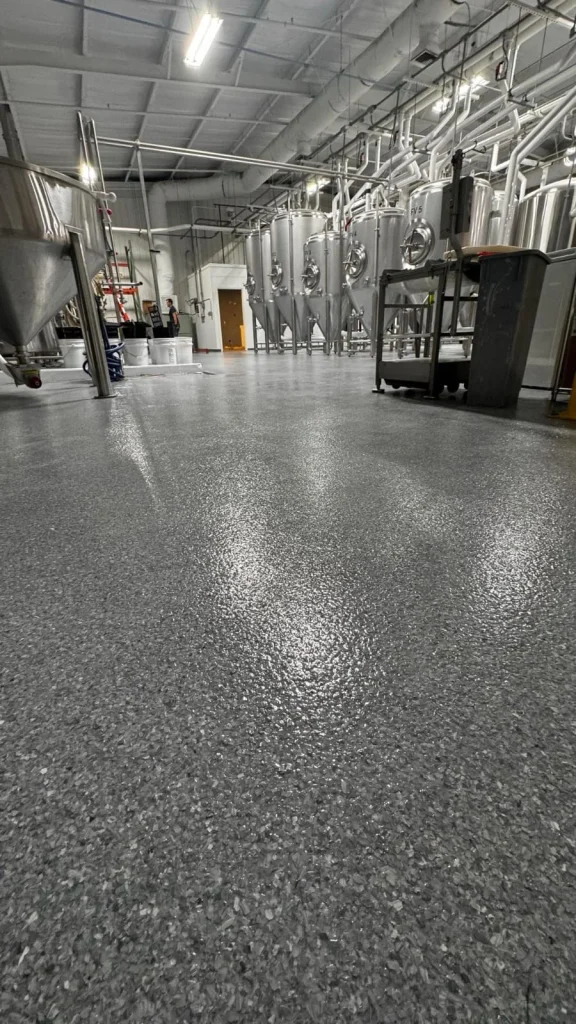
How long does epoxy flooring last? In Florida, a professionally installed residential epoxy or polyaspartic floor can last 15 to 20+ years with proper prep. Commercial floors take more abuse and are typically resealed periodically to keep their protection up. Thin DIY kits are a different story: in Florida heat and humidity they often fail fast, usually from hot tire pickup or poor prep.
The number on the brochure only holds if the floor is installed right for our conditions. Here’s what actually decides lifespan, the warning signs that a floor is wearing out, and how to get the most years out of yours.
Typical Lifespan by Floor Type
| Floor type | What to expect in Florida |
|---|---|
| DIY 1-part or water-based kit | Often fails fast; hot tire pickup and peeling are common |
| Professional epoxy, no UV-stable topcoat | Durable indoors, but yellows and chalks where sunlight hits |
| Professional epoxy base + polyaspartic topcoat | 15–20+ years for residential floors with proper prep |
| Commercial and industrial floors | Long-lasting base; topcoat typically resealed periodically depending on traffic |
The big jump between the first row and the third isn’t just the product. It’s the prep, the thickness, and the topcoat.
What Determines How Long Epoxy Flooring Lasts
1. Surface preparation
Prep is the foundation. A coating bonded to a diamond-ground slab with cracks and pitting repaired can last decades. A coating on a smooth, sealed, or dirty slab can let go within months. If you only remember one thing from this post, make it this. We break down the process in proper concrete surface preparation for epoxy.
2. Moisture in the slab
Florida homes are mostly slab-on-grade, coastal parts of Hillsborough, Manatee, and Sarasota counties sit over a high water table, and older slabs often have missing or damaged vapor barriers. Moisture vapor pushing up through the concrete can cause blistering and delamination years after install. Testing and, when needed, a moisture-mitigating primer protect the floor’s lifespan. See moisture problems in Florida concrete.
3. UV exposure
Epoxy is aromatic, so sunlight makes it amber and chalk. In a garage, that shows up as a yellowed band near the door. A UV-stable topcoat such as polyaspartic prevents it. Outdoor surfaces need UV-stable systems from the start; see can epoxy be used outdoors in Florida.
4. Coating thickness and system
A thick 100%-solids base with a hard topcoat has more material to wear through and resists hot tires far better than a thin film. Flake systems add even more build. For how the main chemistries compare, read epoxy vs. polyaspartic flooring in Florida.
5. Heat and humidity during install
A floor’s lifespan starts on install day. Coating when the slab is too close to the dew point, or when direct sun is baking the concrete, can cause weak bonds, blushing, or outgassing bubbles that become failure points later. Summer dew points here sit in the 70s°F, so timing matters as much as the product.
6. Traffic and use
A home garage with two cars sees very different wear than an auto shop with rolling jacks or a warehouse with forklifts. Heavy commercial traffic wears the topcoat faster, which is why those floors are typically resealed on a schedule.
7. Maintenance
Grit is sandpaper under tires and shoes. Chemicals left sitting can stain or soften a coating. Simple, regular cleaning adds years.
Florida Factors That Shorten Floor Life
- Hot tires. Cars come home off hot pavement most of the year. Thin coatings soften and peel. See why cheap garage coatings peel from hot tires.
- Salt air. Near the coast in Apollo Beach, Sarasota, and Venice, salt carried in on cars and in the air adds wear to bare and poorly protected concrete.
- Afternoon storms and flooding. Water tracked in daily, and occasional storm-surge or flood cleanup, test a floor. A well-sealed coated floor actually cleans up much more easily than bare concrete.
- Golf carts and extra wheels. In Sun City Center, many garages carry a golf cart plus a car, which means more tire traffic in more spots.
Signs Your Epoxy Floor Needs Attention
Floors rarely fail overnight. Watch for:
- Dull, worn traffic lanes where the topcoat is thinning. This is the easiest stage to fix, often with a fresh topcoat.
- Yellowing near the garage door, a sign of UV exposure on epoxy without a UV-stable top.
- Peeling in tire spots, usually from hot tire pickup on a weak or poorly bonded coating.
- Bubbles or blisters, which can point to moisture coming up through the slab.
- Chips and gouges from dropped tools or dragged equipment.
Recoat, Repair, or Replace?
It depends on whether the bond to the concrete is still good.
- Recoat: If the coating is well bonded but the topcoat is worn or dull, it can typically be scuffed and given a new topcoat. This is how commercial floors are kept in service for years.
- Repair: Small chips and gouges can often be patched, though an exact color match on an older floor isn’t always possible.
- Replace: If the coating is peeling, blistering, or delaminating, putting more coating on top won’t hold. The failed material must be ground off and the slab prepped and tested before a new system goes down.
How to Make Your Floor Last Longer
- Start with proper prep. Diamond grinding, crack and pit repair, and a moisture check.
- Choose a UV-stable topcoat for any floor that sees sunlight.
- Respect cure times. Epoxy typically needs about 72 hours before vehicles and about 7 days for full chemical cure; polyaspartic is faster, depending on product and conditions.
- Sweep or dust-mop regularly to keep grit off the surface.
- Clean spills promptly, especially brake fluid, battery acid, and solvents.
- Use a mild cleaner and soft brush or mop instead of harsh solvents or acids.
- Protect from point loads. Put pads under kickstands, jack stands, and heavy equipment feet.
Why Do Some People Say Epoxy Only Lasts a Few Years?
You’ll see wildly different lifespan claims online, from “two or three years” to “a lifetime.” Both can be true, because they describe different floors. The short numbers usually come from homeowners who rolled on a one-part or water-based kit over an acid-etched slab. That thin film was never going to survive Florida tires and heat. The long numbers come from thick, multi-coat systems on ground and repaired concrete.
When comparing quotes, ask each contractor what the system is, coat by coat, and how they prep the slab. A lower price often means a thinner system or skipped grinding, and that difference shows up years later, not on install day.
Does Lifespan Differ Across Tampa Bay?
The same system performs similarly from Riverview to North Port, but local conditions shift the risks. Coastal homes in Apollo Beach, Ruskin, and Venice deal more with a high water table and salt air, so moisture testing and good cleaning habits matter more. New construction in Parrish and Lakewood Ranch brings slabs that need proper cure time before coating. Older slabs in established neighborhoods are more likely to have cracks, pitting, and compromised vapor barriers. A good installer adjusts prep for each, and that adjustment is what protects the 15 to 20+ year potential.
The Bottom Line
A well-installed epoxy or polyaspartic floor is one of the longest-lasting finishes you can put on concrete in Florida. Residential floors can last 15 to 20+ years with proper prep, and commercial floors stay in service for years with periodic resealing. Most early failures come from shortcuts: thin products, skipped grinding, untested moisture, or no UV protection.
With 15+ years coating floors from our home base in Ruskin to Sarasota and North Port, we build every system around Florida conditions. Learn more about our garage floor coatings, or start with our complete guide to epoxy flooring in Florida.
Frequently Asked Questions
How long does an epoxy garage floor last in Florida?
A professionally installed residential epoxy or polyaspartic garage floor can last 15 to 20+ years with proper prep. Thin DIY kits often fail much sooner because of hot tire pickup and poor bonding.
Does epoxy flooring need to be redone?
A well-bonded residential floor may only need a fresh topcoat if traffic lanes wear dull. Commercial floors are typically resealed periodically. Floors that are peeling or blistering need to be removed and reinstalled.
Why is my epoxy floor turning yellow?
Epoxy is aromatic, so UV light makes it amber and chalk over time. A UV-stable topcoat like polyaspartic prevents yellowing in areas that get sunlight.
What makes epoxy floors fail early?
The most common causes are poor surface prep, moisture coming up through the slab, thin low-solids products, and parking before the coating has cured. Installing in bad conditions, such as too close to the dew point, also weakens the bond.
How do I maintain an epoxy floor?
Sweep regularly to remove grit, clean spills promptly, and wash with a mild cleaner and soft mop or brush. Avoid harsh solvents and put pads under kickstands and jack stands.
Get a Free Estimate From One of a Kind Epoxy
One Of A Kind Epoxy Design And Painting has 15+ years of coating experience across Ruskin, Apollo Beach, Sun City Center, Riverview, Tampa, Parrish, Bradenton, Lakewood Ranch, Sarasota, Venice and North Port. Every floor starts with diamond grinding and crack and pit repair, then a coating system chosen for Florida heat, humidity and UV.
Call 941-281-8866 or request your free on-site estimate. We’ll measure your space, check the slab, and recommend the right system for how you use it.