
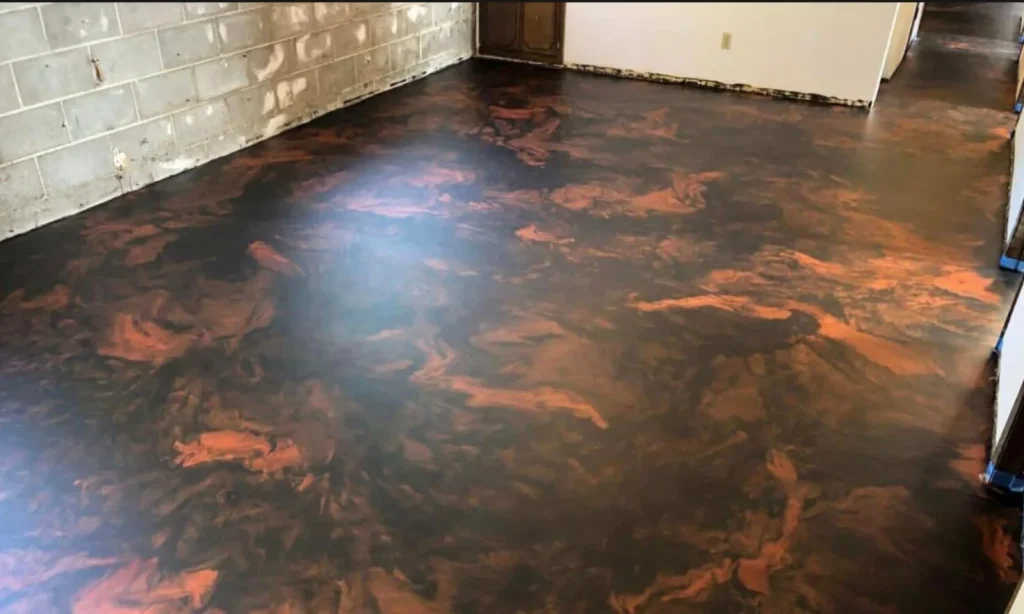
For most Florida homes, the best garage floor coating is a full-broadcast flake system with a UV-stable polyaspartic topcoat. It hides dirt, adds natural slip resistance, stands up to hot tires and forgives the small imperfections every slab has. Metallic epoxy is the choice for a showpiece garage, solid color works for a clean, budget-friendly workspace, and quartz is a heavy-duty textured option more often seen in commercial settings.
This guide compares those four systems side by side so you can decide which look and performance level fits your garage in Ruskin, Tampa, Lakewood Ranch or anywhere in between. If you are still deciding whether to coat at all versus tiles, paint or sealer, start with our comparison of the best flooring for Florida garages.
What All Good Garage Floor Coatings Have in Common
Before comparing looks, understand that the finish is only the visible layer. Every system on this list performs well in Florida only if the foundation underneath is done right:
- Diamond grinding to open the slab and create a surface profile the coating can grip.
- Crack and pitting repair before any coating goes down.
- A thick base coat, typically 100%-solids epoxy, for build and adhesion.
- A durable, UV-stable topcoat such as polyaspartic, which resists the yellowing plain epoxy shows in sunlight.
- Attention to conditions: the slab should be at least 5°F above the dew point during application and cure, which matters during humid Florida summers.
With that foundation, residential epoxy and polyaspartic floors can last 15–20+ years. Without it, even the most expensive-looking system can peel. The base and topcoat chemistry is covered in epoxy vs. polyaspartic in Florida.
Garage Floor Coating Systems at a Glance
| System | Look | Slip resistance | Hides dirt and flaws | Relative cost | Best for |
|---|---|---|---|---|---|
| Flake | Speckled, terrazzo-like | Good (natural texture) | Excellent | Mid | Most family garages |
| Metallic | Glossy, marbled, 3D depth | Low unless additive used | Fair | Highest | Showpiece garages, car collections |
| Solid color | Clean, uniform | Low to moderate with additive | Poor to fair | Lower | Workshops, utility garages |
| Quartz | Textured, granular color blend | Excellent | Good | Mid to high | Heavy-use or wet areas |
Flake Floor Systems
A flake floor starts with a pigmented base coat. While it is still wet, colored vinyl chips are broadcast across the surface, usually to full rejection so the base is completely covered. Loose flakes are scraped off, and the floor is sealed with a clear topcoat, typically polyaspartic.
Why flake is the Florida favorite
- Hides everything: dust, sand, water spots, tire marks and small slab imperfections blend into the pattern.
- Natural texture: the broadcast creates a slightly textured surface that helps with footing when the floor is wet from rain or a dripping car.
- Durable: the multi-layer build handles hot tires, dropped tools and daily traffic.
- Lots of color options: blends range from neutral grays and tans to bold mixes.
A popular variation is the hybrid system: an epoxy base with a polyaspartic topcoat. In the Sarasota market, hybrid flake typically runs about $6–$8 per square foot and full polyaspartic flake about $6.50–$9.50. For full pricing, see our garage floor coating cost guide.
Downsides
Flake is a look not everyone loves, and the texture that helps footing also makes it a little harder to mop than a smooth floor. Topcoat thickness can be adjusted to balance texture and cleanability.
Metallic Epoxy Floors
Metallic floors use metallic pigments mixed into a clear or tinted epoxy. As the installer works the material, the pigments create swirls, ripples and depth that look like marble, lava or polished stone. No two floors are alike.
Where metallic shines
- Car enthusiasts who want the garage to look like a showroom.
- Garages converted to gyms, game rooms or bonus spaces.
- Homeowners who want a floor that matches an epoxy bar top or interior design.
What to know before choosing metallic
- Cost: metallic is the most expensive option, typically about $8–$12 per square foot because the look is created by hand.
- Slippery when wet: the high-gloss surface can be slick, so ask for an anti-slip additive in the topcoat, especially near the garage door where rain blows in.
- Shows dust and scratches: dark, glossy metallics show dirt more than flake does.
- UV protection: epoxy ambers in sunlight, so a UV-stable topcoat is important on the front of the floor.
Solid Color Coatings
A solid color system is a pigmented base coat and topcoat with no flakes or metallic effects. It gives a clean, uniform look, often in gray, tan or white.
Pros
- Typically the most affordable professional option.
- Bright, light colors reflect light and make a workshop easier to work in.
- Smooth surface is easy to sweep and mop.
- Easy to paint safety lines or layout marks on.
Cons
Solid colors hide very little. Tire marks, dust, sand and every small imperfection in the slab show. They can also be slippery when wet unless an anti-slip additive is used. Solid color works best in workshops and utility spaces where function matters more than looks.
Quartz Broadcast Systems
Quartz systems use colored quartz sand broadcast into the resin instead of vinyl flakes, usually in multiple layers, then sealed with a clear topcoat. The result is a dense, granular texture with a speckled color blend.
When quartz makes sense
- Areas that stay wet, such as garages used to rinse off boats, beach gear or pool equipment.
- Heavy-use spaces that need extra abrasion resistance.
- Owners who prioritize grip over easy cleaning.
Quartz is more common in commercial and institutional settings than in home garages. Its texture is excellent for footing but harder to clean, and it is usually overkill for a typical family garage. For more on balancing texture and cleanability, see our guide to slip-resistant pool deck and lanai coatings.
Choosing the Right Coating for Your Florida Garage
Match the system to how you use the garage
- Daily parking for family cars: flake with a polyaspartic topcoat.
- Showpiece or car collection: metallic with anti-slip additive and UV-stable topcoat.
- Workshop or storage: solid color, or flake if you want to hide wear.
- Wet or boat garage: flake with added texture, or quartz.
- Golf cart parking: flake handles cart traffic and charging areas well, a common setup in Sun City Center.
Consider sun exposure
West-facing garages and garages near the coast get strong sun when the door is open. Choose a UV-stable polyaspartic topcoat regardless of system to avoid yellowing and chalking.
Think about downtime
Most residential garages are completed in 1–2 days. Polyaspartic topcoats let you drive on the floor sooner, typically 24–48 hours depending on product and conditions, while epoxy topcoats often need about 72 hours. See how long a garage floor coating takes for the full timeline.
Don’t let the look distract from the system
Two floors with the same flake blend can perform very differently. Ask about grinding, base coat thickness and topcoat type. Thin coatings are the main cause of hot-tire pickup, which is the most common garage coating failure in Florida. For national context on what professional garage coatings cost, the Homewyse garage coating calculator is a useful reference.
Our Recommendation
If you are unsure, go with flake. It is the best garage floor coating for the widest range of Florida homes because it balances looks, durability, slip resistance and cost. Choose metallic if you want the garage to be a showpiece, solid color for a clean utility space, and quartz only where wet-floor grip is the top priority.
One of a Kind Epoxy installs flake, metallic and solid color systems with epoxy and polyaspartic chemistry across Hillsborough, Manatee and Sarasota counties. See our garage floor coatings page for details, or read our complete guide to epoxy flooring in Florida.
Ready to choose? See our flake epoxy flooring and metallic epoxy floors pages for systems, samples and pricing.
Frequently Asked Questions
What is the most durable garage floor coating?
A properly installed system with a thick epoxy base and a polyaspartic topcoat over a diamond-ground slab is among the most durable options. Flake broadcast adds build and hides wear.
Are metallic epoxy garage floors slippery?
They can be when wet because of the high-gloss finish. An anti-slip additive in the topcoat improves traction, especially near the garage door.
Is a flake floor hard to clean?
Not really. The texture makes it slightly harder to mop than a smooth floor, but flakes hide dirt well and the topcoat can be adjusted to balance texture and cleanability.
What is the difference between flake and quartz floors?
Flake systems use colored vinyl chips, while quartz systems use colored quartz sand. Quartz is more textured and grippier, but harder to clean and more common in commercial spaces.
Will my garage floor coating turn yellow in the Florida sun?
Plain epoxy can amber in sunlight. A UV-stable polyaspartic topcoat helps prevent yellowing on floors that get sun when the garage door is open.
Get a Free Estimate From One of a Kind Epoxy
One Of A Kind Epoxy Design And Painting has 15+ years of coating experience across Ruskin, Apollo Beach, Sun City Center, Riverview, Tampa, Parrish, Bradenton, Lakewood Ranch, Sarasota, Venice and North Port. Every floor starts with diamond grinding and crack and pit repair, then a coating system chosen for Florida heat, humidity and UV.
Call 941-281-8866 or request your free on-site estimate. We’ll measure your space, check the slab, and recommend the right system for how you use it.