
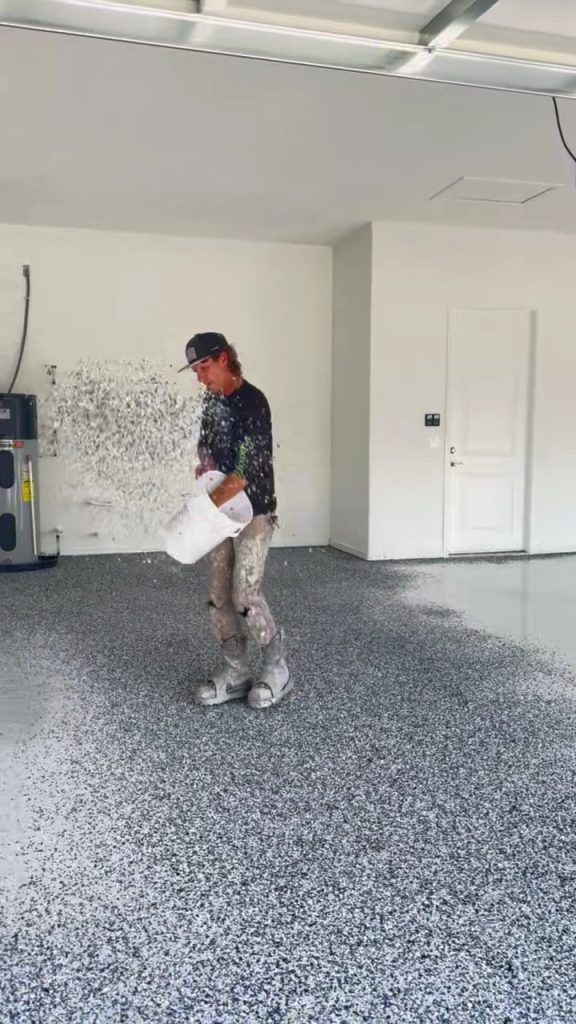
So, how long does a garage floor coating take? Most residential garages we coat are installed in 1–2 days, depending on the size of the garage, how much repair the slab needs, and which system you choose. After the last coat goes down, you can usually walk on a polyaspartic floor within hours and park in about 24–48 hours; a traditional epoxy floor typically needs around 24 hours before foot traffic and about 72 hours before you drive on it.
Those numbers always come with a caveat: depending on product and conditions. Temperature, humidity and slab moisture all affect cure, and Florida gives us plenty of all three. Below is the full timeline, from moving your stuff out to parking the car back inside.
The Short Timeline at a Glance
| Milestone | Polyaspartic or Epoxy + Polyaspartic Top | Traditional Full Epoxy |
|---|---|---|
| Installation | Often 1 day | Often 2 days (more coats, longer recoat waits) |
| Light foot traffic | Within hours / same day | About 24 hours |
| Normal foot traffic, moving light items back | About 24 hours | About 24–48 hours |
| Parking vehicles | Typically 24–48 hours | About 72 hours |
| Full chemical cure | Varies by product | About 7 days |
All times depend on the specific products and on-site conditions. We give you exact return-to-service times for your floor before we start.
What Happens on Install Day
Most of the clock time on a garage job is not spent rolling coatings. It goes into prep, and prep is where a floor either succeeds or fails. A typical sequence looks like this:
- Diamond grinding. We grind the entire slab to open the surface so the base coat can bond. This also removes old sealers, paint and surface contamination. See our guide to concrete surface preparation for epoxy for why we grind instead of acid etching.
- Vacuum and inspect. Dust comes out, and the ground slab tells us a lot about cracks, pitting and any damp spots.
- Crack and pitting repair. Repairs are filled and ground flush. A slab with many repairs adds time.
- Base coat. The first bonded coat goes down.
- Broadcast or color coat. On flake floors, flake is broadcast into the wet base. Metallic floors get their design layer here.
- Scrape and topcoat. Loose flake is scraped and vacuumed, then the clear topcoat goes on. Anti-slip additive can be mixed in at this stage.
With a fast-curing polyaspartic system, recoat windows are short, so a standard two-car garage can often go from bare concrete to finished floor in a single day. With a traditional epoxy system, each coat needs more time before the next one goes on, which is why those jobs often stretch into a second day.
What Makes a Job Take Longer
The 1–2 day window covers most homes, but these factors can push it out:
- Size. A three-car garage with a golf cart bay takes longer than a one-car.
- Slab condition. Heavy cracking, spalling, deep pitting or old coatings to remove all add grinding and repair time. Older slabs are covered in detail in our post on putting epoxy over old concrete.
- Moisture mitigation. If testing shows high moisture, a vapor-barrier primer goes down first, adding a coat and cure time. Coastal slabs with a high water table are common candidates.
- System choice. Metallic floors take more hands-on time than a solid color. Full epoxy takes longer than polyaspartic.
- Extras. Stem wall coating, cove base or steps add work.
- Weather. Florida afternoon storms and high dew points can force us to adjust the schedule.
Why Florida Weather Affects Cure Time
Coatings cure through a chemical reaction, and temperature and moisture control how that reaction behaves. A few rules we follow on every job:
- Dew point. The slab needs to stay at least 5°F above the dew point during application and cure. Summer dew points in Tampa Bay sit in the 70s, so an open garage door on a muggy morning can cause condensation on a cool slab. That can ruin the bond or cloud the finish.
- Heat. High temperatures shorten pot life and working time, so crews mix smaller batches and move faster. Heat speeds up cure a bit, but it also shrinks the margin for error.
- Direct sun on the slab. Sun baking the concrete near the door can cause outgassing, which shows up as bubbles and pinholes. We plan around the sun angle and often close the door during critical stages.
These are the same concerns covered in our article on how Florida heat and humidity affect epoxy flooring. The short version: an installer who ignores the weather will hand you a floor that looks fine on day one and fails later.
Walk, Park, Load: What You Can Do and When
Walking on it
On a polyaspartic topcoat, light foot traffic is usually fine within hours. On full epoxy, wait about 24 hours. Socks or clean shoes only for the first day, and no dragging anything across the floor.
Moving things back in
Light shelving and bins can usually come back in after about 24 hours on a polyaspartic floor. Heavy tool chests, gun safes and anything with small metal feet should wait longer, and they should go on pads or be lifted into place, not slid.
Parking your car
This is the one people care about most. Plan on roughly 24–48 hours for a polyaspartic system and about 72 hours for traditional epoxy, depending on product and conditions. Parking too early is a leading cause of tire marks and early damage, especially in summer when tires come in hot. Our post on hot-tire pickup explains what happens when a coating is loaded before it is ready.
Full chemical cure
A floor can hold a car before it reaches full chemical resistance. Epoxy typically takes about 7 days to fully cure. During that first week, wipe up oil, gas and other spills quickly and avoid harsh cleaners.
Is Faster Always Better?
Fast-curing polyaspartic topcoats are a big reason one-day garage floors are possible, and for most homeowners the shorter downtime is a real advantage. But fast cure also means a short working window, so it takes an experienced crew to apply well in Florida heat. The trade-offs between the two chemistries are covered in our comparison of epoxy vs. polyaspartic flooring in Florida.
What should never be rushed is prep. A same-day floor on a slab that was only washed, not ground, is a floor that will peel.
Special Case: New Construction
If you just closed on a new home in Parrish, Apollo Beach or Ruskin, the calendar starts before we arrive. New concrete typically needs about 28 days of cure before coating, and we still verify moisture regardless of age. Many new-build owners book their floor for after that window, before they fully move into the garage. If you are in one of those neighborhoods, see our epoxy flooring services in Parrish.
How to Prepare So the Job Stays on Schedule
- Empty the garage completely before the crew arrives, including items on the floor along the walls.
- Plan where your cars will live for 1–3 nights, depending on system.
- Tell us about old coatings, sealers or leaks so we can plan prep time.
- Keep sprinklers off the garage apron and pets and kids out during install and cure.
- Ask for exact return-to-service times for your products in writing before the job starts.
Ready to schedule? Our garage floor coating services page outlines the systems we install. For everything else about coatings in our climate, see our complete guide to epoxy flooring in Florida.
Frequently Asked Questions
Can a garage floor be epoxied in one day?
Often, yes. With a fast-curing polyaspartic topcoat, a typical two-car garage can go from grinding to finished floor in a single day. Traditional full-epoxy systems usually take two days because of longer waits between coats.
How long after epoxy can I park my car in the garage?
For a traditional epoxy floor, plan on about 72 hours before parking. Polyaspartic systems typically allow parking in 24 to 48 hours, depending on product and conditions.
How long does epoxy take to fully cure?
Epoxy typically reaches full chemical cure in about 7 days. You can usually walk on it after about 24 hours, but clean up spills quickly during that first week.
Does humidity make epoxy take longer to cure?
Humidity and temperature both affect cure. The bigger risk in Florida is condensation, so the slab must stay at least 5 degrees F above the dew point during application and cure.
How long do I need to wait to coat a new concrete garage floor?
New concrete typically needs about 28 days to cure before coating. Moisture should still be tested regardless of the slab's age.
Get a Free Estimate From One of a Kind Epoxy
One Of A Kind Epoxy Design And Painting has 15+ years of coating experience across Ruskin, Apollo Beach, Sun City Center, Riverview, Tampa, Parrish, Bradenton, Lakewood Ranch, Sarasota, Venice and North Port. Every floor starts with diamond grinding and crack and pit repair, then a coating system chosen for Florida heat, humidity and UV.
Call 941-281-8866 or request your free on-site estimate. We’ll measure your space, check the slab, and recommend the right system for how you use it.