
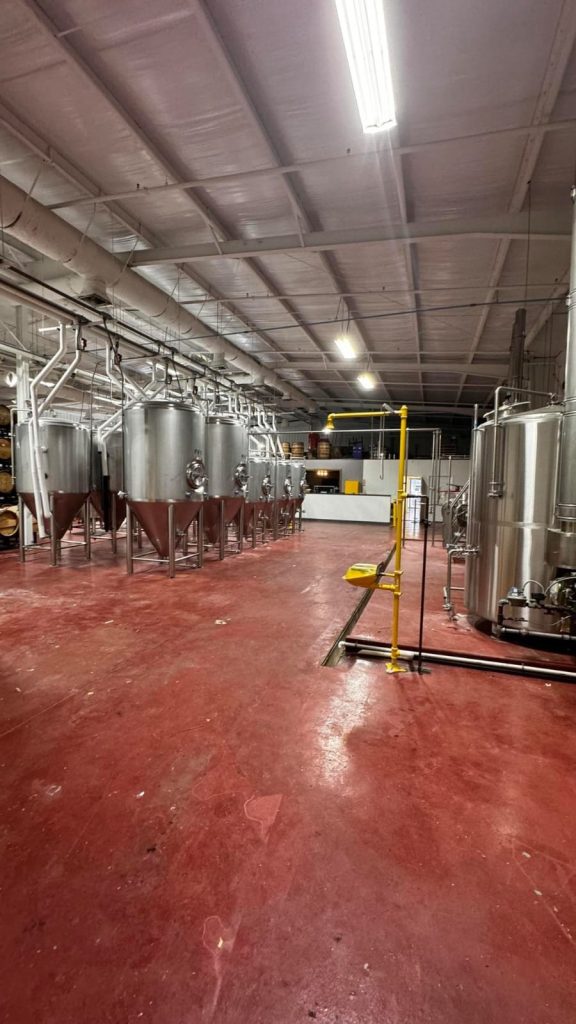
Chemical resistant floor coatings come in levels, not one-size-fits-all. A standard epoxy floor resists everyday spills like motor oil, gasoline, and antifreeze. More aggressive chemicals such as brake fluid, strong solvents, and battery acid are hard on standard coatings and call for an upgraded system like epoxy novolac. The right choice depends on what will actually hit your floor and how quickly spills get cleaned up.
This guide breaks down what each common coating can handle, the difference between a stain and real chemical damage, and how we match systems to garages, shops, and commercial spaces around Tampa Bay and Sarasota.
Stain Resistance vs. Chemical Resistance
People use these terms interchangeably, but they describe different kinds of damage.
- Staining is a change in color. The coating is still intact, but something left a mark. Tire plasticizers, rust, and some dyes do this.
- Softening happens when a chemical swells or weakens the coating. The surface may feel tacky or scratch easily after a spill.
- Etching or blistering is when a chemical actually eats into the film or breaks its bond with the concrete. This is true chemical attack.
A coating can be excellent at one and only fair at another. A glossy topcoat might resist softening from gasoline but still pick up a faint stain from a hot tire. When you compare products, ask what kind of resistance you are getting and to which chemicals.
What Standard Floor Coatings Can Handle
Here is a practical overview of the systems we install most. These are general guidelines; actual resistance varies by product, thickness, cure, and how long a chemical sits on the floor.
| Exposure | Standard epoxy | Epoxy novolac | Polyaspartic topcoat |
|---|---|---|---|
| Motor oil | Resists well | Resists well | Resists well |
| Gasoline | Resists; wipe up promptly | Resists well | Resists; wipe up promptly |
| Antifreeze | Resists well | Resists well | Resists well |
| Brake fluid | Hard on it; can soften or stain | Designed for it | Depends on product; clean immediately |
| Strong solvents | Hard on it | Designed for it | Depends on product |
| Battery acid and other acids | Hard on it; can etch | Designed for it | Depends on product |
| Hot tire plasticizers | Can stain | Can stain | Resists staining well |
| UV / sunlight | Ambers and chalks | Ambers | UV-stable |
Standard epoxy
A properly installed 100%-solids epoxy is a strong, dense film that resists the fluids most homeowners deal with: oil, gas, and antifreeze. For a typical residential garage, standard epoxy with a good topcoat covers nearly everything that will ever get spilled. Its weak spots are aggressive chemicals, which we cover below, and sunlight. Epoxy is aromatic, so it yellows and chalks under UV, which is why it usually gets a UV-stable topcoat near open garage doors. (Outdoor use is a separate topic, covered in can epoxy be used outdoors in Florida.)
Epoxy novolac
Epoxy novolac is a more tightly cross-linked epoxy made for harsh chemical exposure. It is the upgrade when a floor will regularly see brake fluid, solvents, or acids. It is common in auto repair bays, fleet maintenance areas, battery charging stations, and industrial spaces. It costs more than standard epoxy and is overkill for most home garages, but it is the right tool when the exposure is real.
Polyaspartic topcoats
Polyaspartic topcoats are hard, abrasion-resistant, and UV-stable, and they resist hot tire staining far better than thin epoxy paints. Chemical resistance varies more between polyaspartic products than most people realize, so for anything beyond everyday automotive fluids we check the manufacturer’s data rather than assuming. For a full comparison of the two chemistries, see epoxy vs. polyaspartic flooring in Florida.
The Tough Ones: Brake Fluid, Battery Acid, and Solvents
These three cause most of the chemical damage we see on coated floors.
- Brake fluid is a strong solvent. Left on a standard coating, it can soften the film and leave a permanent mark. Hydraulic fluids used in aviation are even more aggressive.
- Battery acid can etch standard epoxy and attack the concrete underneath if it gets through. Anyone charging batteries in a garage or shop should plan for it.
- Solvents like strong degreasers, paint thinners, and lacquer thinner can soften or dull standard coatings, especially with repeated exposure.
If these show up once in a blue moon and get wiped right away, a standard system is usually fine. If they are part of daily work, you want epoxy novolac in the areas that see them. Our post on commercial epoxy flooring for auto shops covers how we lay out systems for working bays.
Contact Time Matters More Than People Think
Chemical resistance is usually a question of how long a chemical sits on the floor. A gasoline drip wiped up in ten minutes is a very different test from a puddle left over a hot weekend. Coating resistance is typically tested with spot tests like ASTM D1308, where a chemical is placed on the surface for a set time and the effect is rated. Those tests are useful for comparing products, but they don’t mean a coating can hold a chemical indefinitely.
Simple rule: clean spills promptly. Even the toughest coating lasts longer when it doesn’t have to soak in brake fluid overnight.
Full Cure Comes Before Full Resistance
A coating’s chemical resistance isn’t at its maximum the day it’s walkable. Epoxy typically reaches full chemical cure in about 7 days, depending on product and conditions. Polyaspartic cures faster, but it still needs time before heavy exposure. During that window:
- Avoid working on cars or storing fluids directly on the floor.
- Don’t use strong cleaners or degreasers yet.
- Wipe up any drips immediately.
Florida heat and humidity affect how coatings cure too. We cover that in how Florida heat and humidity affect epoxy flooring.
Matching the Coating to the Space
Home garages
For most Ruskin, Riverview, and Sarasota garages, a 100%-solids epoxy base with a polyaspartic topcoat handles oil, gas, antifreeze, lawn equipment, and hot tires. Flake broadcast adds texture and hides small marks. If you keep a workbench where you use solvents or charge batteries, we can talk about upgrading that area.
Auto shops and industrial floors
Service bays, fleet garages, and manufacturing floors often call for epoxy novolac where aggressive fluids are used, plus a topcoat chosen for abrasion and cleaning. Commercial floors are also typically resealed periodically to keep their protection up.
Restaurants and commercial kitchens
This is where we are blunt: standard epoxy is not the best choice for cook lines and dish areas. Hot oil, boiling water, and steam cleaning cause thermal shock that urethane cement handles far better. Epoxy works well in dry storage, front-of-house, and bar areas. We explain the full picture in epoxy flooring for restaurants and commercial kitchens.
Countertops and bar tops
Epoxy countertops and bar tops resist everyday spills, but like any surface they are happiest when acidic drinks, strong cleaners, and hot pans don’t sit on them. Wipe spills and use trivets.
What About a Sealer Instead?
A penetrating concrete sealer can reduce staining on bare concrete, but it doesn’t create the thick, continuous barrier a coating does, so chemicals can still reach the slab. For some outdoor or low-use areas, a sealer is the right, cheaper answer. For a garage or shop floor that sees fluids, a coating protects far better. See epoxy flooring vs. concrete sealer to decide which fits your floor.
Prep Still Decides Everything
Chemical resistance means nothing if the coating comes off the slab. A coating bonded to diamond-ground, repaired concrete keeps chemicals on top where you can clean them. A coating on a poorly prepared slab can let fluids creep under lifting edges and spread the damage. That is why every system we install, from home garage floor coatings to commercial floors, starts with grinding and repair.
With 15+ years coating floors across Hillsborough, Manatee, and Sarasota counties, we would rather recommend the right system than sell you the wrong one. For more on how coatings perform in our climate, visit our complete guide to epoxy flooring in Florida.
Frequently Asked Questions
Will brake fluid ruin an epoxy floor?
Brake fluid is hard on standard epoxy and can soften or permanently mark it if left sitting. Wiping it up right away usually prevents damage, and epoxy novolac is the better choice where brake fluid is used regularly.
Is epoxy resistant to gasoline and oil?
Yes. A properly installed, fully cured 100%-solids epoxy resists motor oil, gasoline, and antifreeze. Cleaning spills promptly keeps the floor looking its best.
What is the most chemical resistant floor coating?
For aggressive chemicals like solvents, acids, and brake fluid, epoxy novolac is a common choice because it is more tightly cross-linked than standard epoxy. The best system still depends on the specific chemicals and how long they contact the floor.
Can battery acid damage a garage floor coating?
Battery acid can etch standard epoxy and reach the concrete underneath. If you charge batteries in a garage or shop, an acid-resistant system in that area and prompt cleanup are the safest approach.
How long before I can put chemicals on a new epoxy floor?
Epoxy typically needs about 7 days to reach full chemical cure, depending on product and conditions. Avoid fluids, degreasers, and working on vehicles on the floor until then.
Get a Free Estimate From One of a Kind Epoxy
One Of A Kind Epoxy Design And Painting has 15+ years of coating experience across Ruskin, Apollo Beach, Sun City Center, Riverview, Tampa, Parrish, Bradenton, Lakewood Ranch, Sarasota, Venice and North Port. Every floor starts with diamond grinding and crack and pit repair, then a coating system chosen for Florida heat, humidity and UV.
Call 941-281-8866 or request your free on-site estimate. We’ll measure your space, check the slab, and recommend the right system for how you use it.