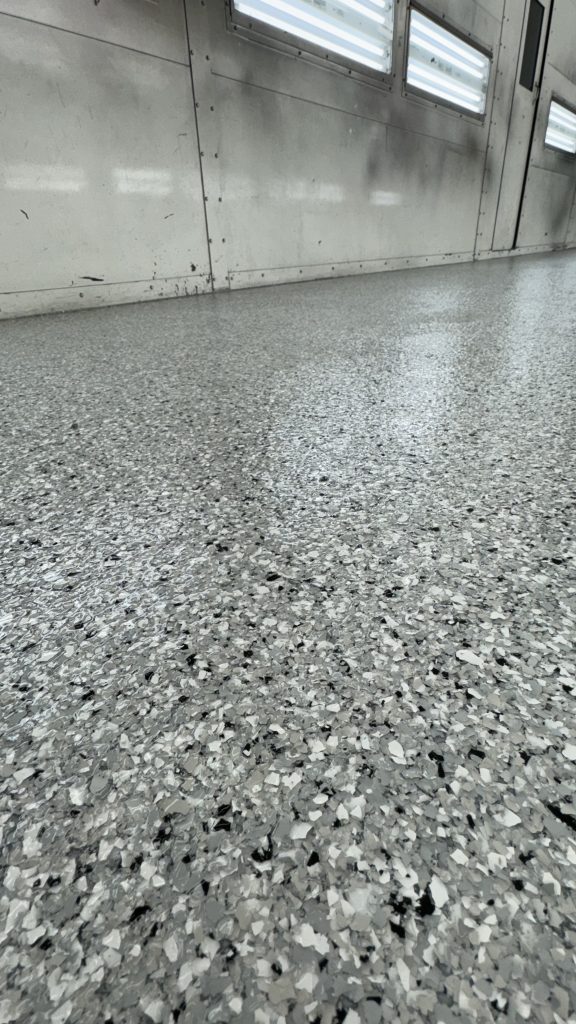
Epoxy Novolac Zones
Higher chemical resistance where solvents, acids or aggressive fluids are used.
Chemical resistance →
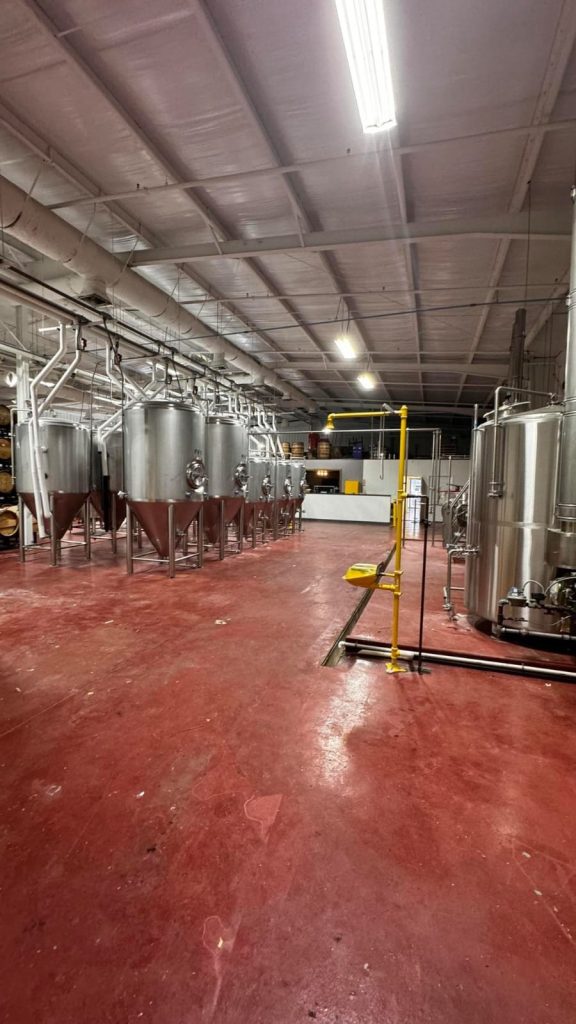
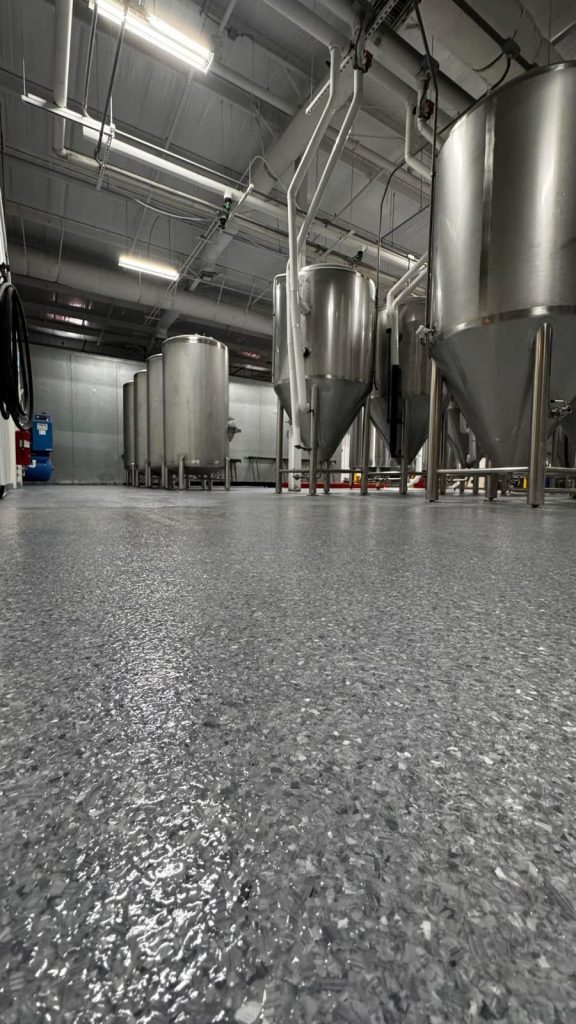
Industrial epoxy flooring for production floors, manufacturing, breweries and processing spaces: chemical-resistant systems on diamond-ground concrete, built for impact and daily washdowns.
One Of A Kind Epoxy Design And Painting installs commercial floors across Hillsborough, Manatee and Sarasota counties, with 15+ years of coating experience and free on-site estimates. Call 941-281-8866.
Industrial floors fail in predictable ways: chemicals soften thin coatings, dropped parts chip weak films, and water finds its way under anything that wasn't bonded properly. An industrial epoxy floor has to be built around the actual exposure, not a brochure.
We diamond grind to open, sound concrete, repair cracks and spalls, test for moisture, then build a thick 100%-solids epoxy system. In zones that see solvents, acids or brake and hydraulic fluids, we specify epoxy novolac, a more tightly cross-linked epoxy made for harsh chemical exposure. See what floor coatings can handle.
Standard epoxy resists oil, gasoline and antifreeze. Brake fluid, solvents, acids and battery acid are hard on standard coatings. We map where each chemical is used and specify novolac only where it's needed, which keeps cost in check. Spills should still be cleaned promptly; no coating is meant to sit under a puddle of solvent.
Areas that see hot water, steam cleaning or hot process fluids can stress standard epoxy. Urethane cement handles thermal shock far better, and we'll tell you honestly when an area needs it instead of epoxy.
Production can't always stop. We phase by zone and time the work around shutdowns, weekends or slow shifts. Full chemical cure typically takes about 7 days for epoxy, depending on product and conditions, so plan chemical exposure accordingly.
Sweep grit daily, use cleaners compatible with the coating, and reseal the topcoat in high-traffic lanes before wear reaches the base coat. Resealing is far cheaper than grinding off and recoating.
We serve industrial facilities throughout:
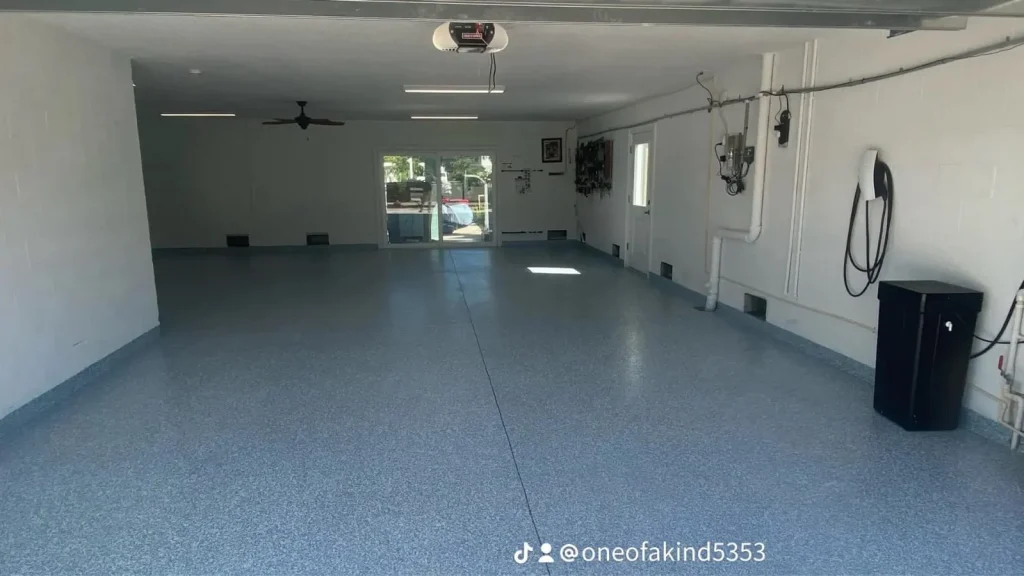
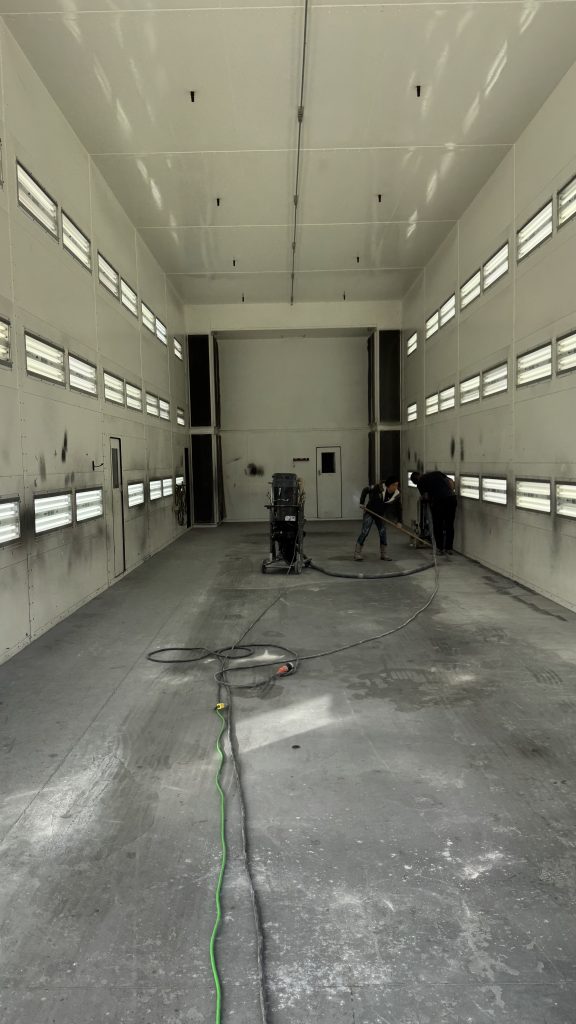
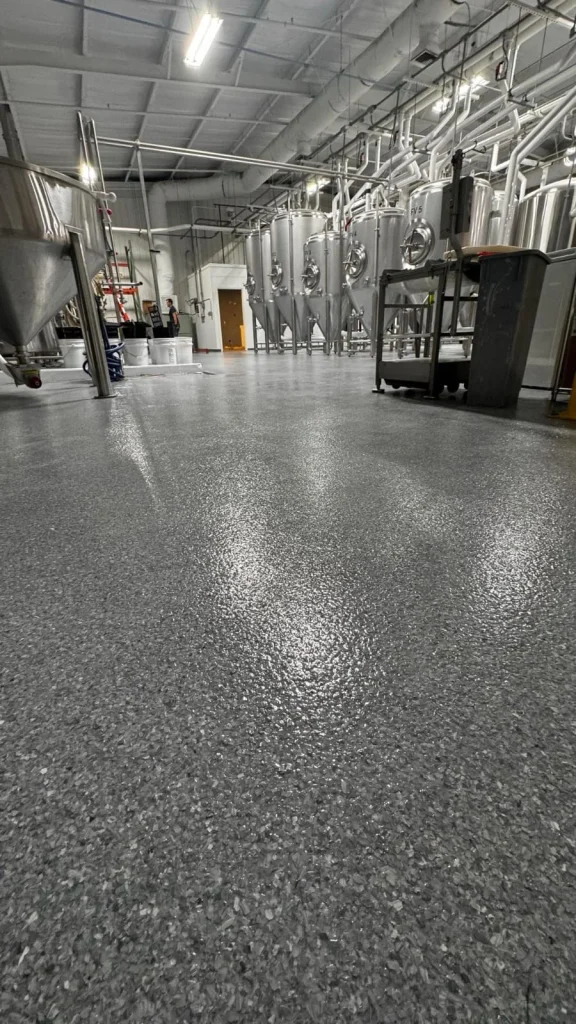
Related services:
A more tightly cross-linked epoxy made for harsh chemical exposure such as solvents, acids and brake or hydraulic fluids. It's used in the zones that need it rather than across the whole floor.
Standard epoxy isn't ideal for repeated thermal shock. Urethane cement handles hot water, steam and hot oil far better, and we'll recommend it where appropriate.
It depends on size and system. We phase work by zone to limit downtime; epoxy typically needs about 7 days for full chemical cure.
Yes, where there's any doubt. High readings call for a moisture-mitigating primer to prevent blistering.
Send us your chemical list and traffic details, and we'll recommend a system and phasing plan after assessing the slab.
941-281-8866